
Concrete block walls in Wichita Falls TX - a wall built for the job it does
Need privacy along the fence line, or is dirt washing down a slope into your yard? We build block walls made for the load they carry.
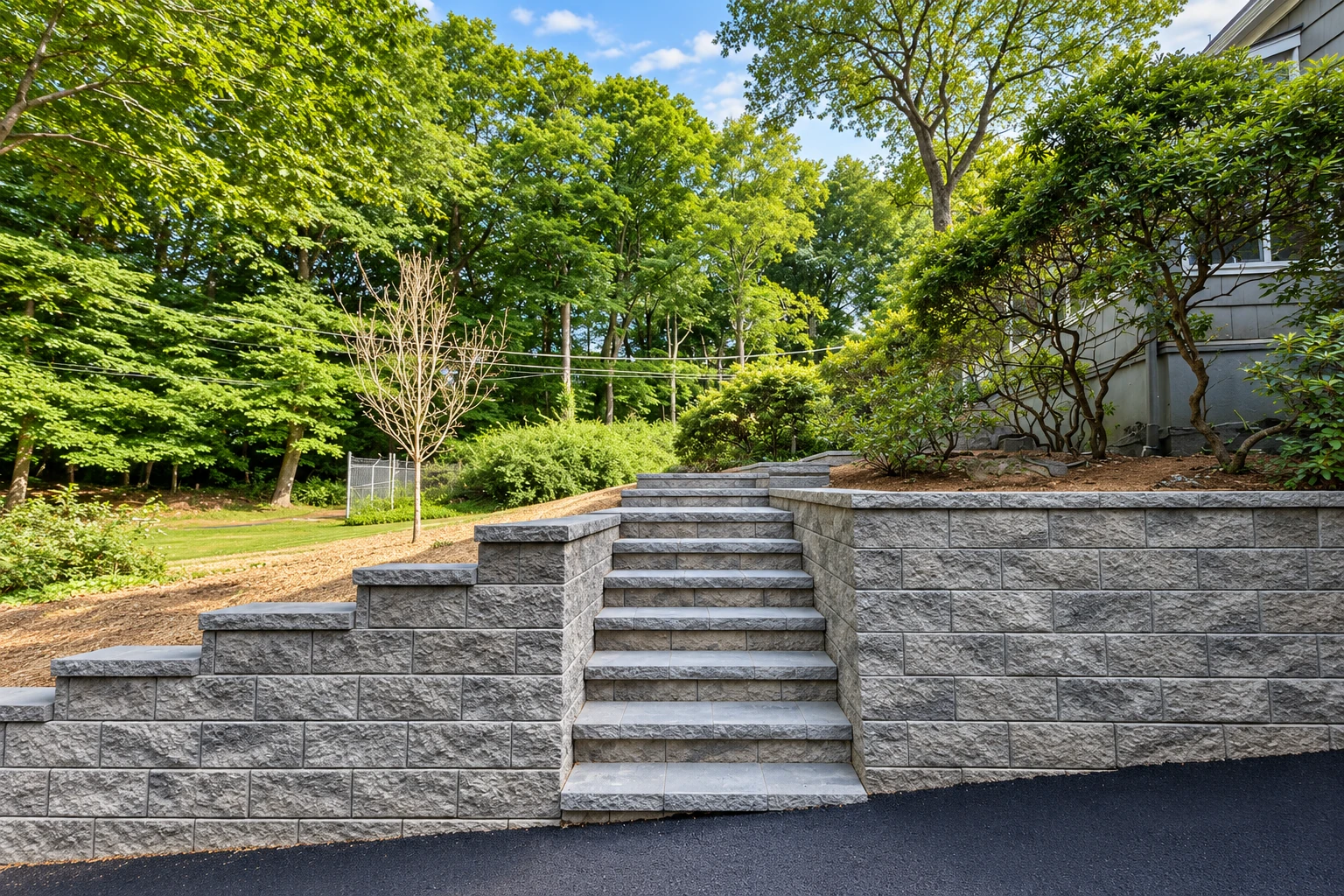
What kind of concrete block wall does my yard need?
A concrete block wall in Wichita Falls gives you a solid fence or garden wall for privacy, security, shade and a break from wind and noise. Built a different way, the same block becomes a retaining wall that holds back a slope.
Most calls I get about block walls start with a sagging fence, a yard the neighbors can see into or a slope that won't stay put. The price mostly comes down to the wall's length and height, whether it holds back soil and needs a deeper footing, steel and drains, and how the top is finished. The schedule turns on those same things, plus the weather and any permit. Block that goes under a house or an addition is its own job, foundation block wall installation, so this page sticks to walls out in the yard. Work here has to follow the city's own codes and pass its inspections, so we plan your wall around them from the first visit, and your estimate spells out what your wall really needs.
How do you know your yard needs a block wall?
Most people call us about a block wall because something in the yard has been bugging them for a while. These are the things homeowners usually point out when I come out to look.
Soil washes off a slope onto your patio or lawn after hard rain, which usually means it needs holding back.
A wood fence keeps leaning, rotting or losing boards, and you're tired of patching something that won't stay put.
You can see straight into the neighbor's yard, or street noise carries into yours, and you want a solid barrier.
An old block wall leans or bulges, which usually means it lacks the footing or steel to hold its load.
The ground behind a retaining wall stays soggy for days after rain, a sign water is trapped back there.
Wind whips across your patio or garden beds, and you'd like shade and a break from it.
If a wall is leaning or the dirt behind it is moving, call (940) 298-1133 before the next heavy rain instead of waiting to see how far it goes.
What happens when you call us about a block wall?
Most block wall jobs run the same way, from a phone call to a walk along the finished wall. Here's who does what at each step and what you'll have in hand before you decide.
Call or send the form
Call (940) 298-1133 or send the form, and I'll set up a time to come out and look at the job with you. We answer the phone seven days a week, well into the evening.
Walk the spot with me
I come out myself, and the first thing we settle is whether the wall is just for privacy or has to hold back dirt, because that changes how it's built. You get a written estimate and a plain answer on what the job really needs, and if it's smaller than you feared, I'll tell you so.
We handle permits and build
Once you say go, we take care of any city permit the job calls for and line up the inspections with the city office. Then we dig, set the footing and lay the block, and I work alongside our crew while the wall goes up.
Walk the finished wall together
Before we call it finished, we clean up and walk the wall with you. Ask anything you like, because I'd rather you understand what's holding up your yard than wonder about it.
Get a written estimate for your block wall
We reply within one business day to set a time, then I come out, look at the spot with you and give you a free written estimate. There's no pressure to book.
- Call
- (940) 298-1133
- Hours
- Mon–Fri: 8 AM–11 PM, Sat–Sun: 6 AM–10 PM
Block wall materials and how we build them
A privacy or garden wall can run on one continuous footing, span between pilasters, which are thick block posts, tie into side walls, follow a curve, or mix those. Which layout fits depends on how long the wall runs, how your yard lies and the look you want. Along the top goes a coping, the cap that keeps water from soaking down into the block and gives the wall a finished edge.
A wall that holds soil gets a proper footing and a way for water to get out from behind it. We prepare the ground first, because the footing has to sit on firm, undisturbed soil or well-packed fill, and steel bars stand upright in the block cores so the weight of the dirt can't tip or slide the wall. Drainage gets planned at the same time, not added later.
When new block meets an older wall or runs up to the house, I match the block size, the mortar color and the joint lines so it's hard to tell where the old work stops. Block also makes a solid core for outdoor kitchen masonry, a grill island or counter that gets faced in brick or stone to go with the house.
Block wall questions we hear in Wichita Falls
How much does a concrete block wall cost per square foot in Wichita Falls?
Installing a concrete block wall across the US usually costs about $15 to $20 per square foot of wall, and that's best read as a typical starting range, not a Wichita Falls price. Your own figure comes from the written estimate, since it's built on your wall's size and what it has to hold. Every job is backed by our satisfaction guarantee.
Do I need a permit to build a block wall in Wichita Falls?
Your wall may need one, so check before any block goes up. The City of Wichita Falls issues permits and says construction work in the city needs the correct permits and licenses, and its building inspections office is where to ask about your wall. We'll go over it with you at the estimate, and if a permit is needed, it's part of the paperwork we handle.
How do I check a block wall contractor's license in Wichita Falls?
Ask the contractor which city license or registration they hold, because the city licenses and registers contractors. We're fully licensed and insured, and it's a fair question to ask me at the estimate.
Why does a block retaining wall need drains?
Water trapped behind a retaining wall builds up and adds to the load the wall is holding, so it needs a way out. Drains usually go through the wall itself, and where long, heavy rains are expected, a drain along the back can be added to them.
Are cracks in my concrete block wall a problem?
Usually not, if they're shrinkage cracks, the fine cracks that come from the block and mortar shrinking a little, because those aren't a structural concern. Exposed walls above ground typically get control joints, planned breaks that keep the wall looking clean and limit moisture and air getting through, though a wall with enough horizontal steel may not need them. A crack that keeps widening, or a wall that's leaning, is a different story and worth having me look at.
How long does it take to build a concrete block wall?
It depends mostly on the wall's size, the footing work and the weather, and a retaining wall takes longer because soil can't go back against it right away. Industry guidance treats 40° to 90°F as normal weather for block work, and unless the work is covered, laying stops in heavy rain, since fresh mortar can wash out and leave the wall weaker or stained. Backfill waits until the block has gained enough strength or the wall is braced.
More block work around the house and yard
Foundation block wall installation
When block goes under a house, garage or addition, it carries the building's weight, so that wall is planned and built from the footing up for that load.
Outdoor kitchen masonry
A new garden wall is a natural place to tie in a grill island or counter, and planning both at once saves digging the same ground twice.
Get a price on your block wall
Have the wall's rough length and height in mind, and whether it holds back soil, and we can start working it out on the first call at (940) 298-1133 or through the form.
Mon–Fri: 8 AM–11 PM, Sat–Sun: 6 AM–10 PM